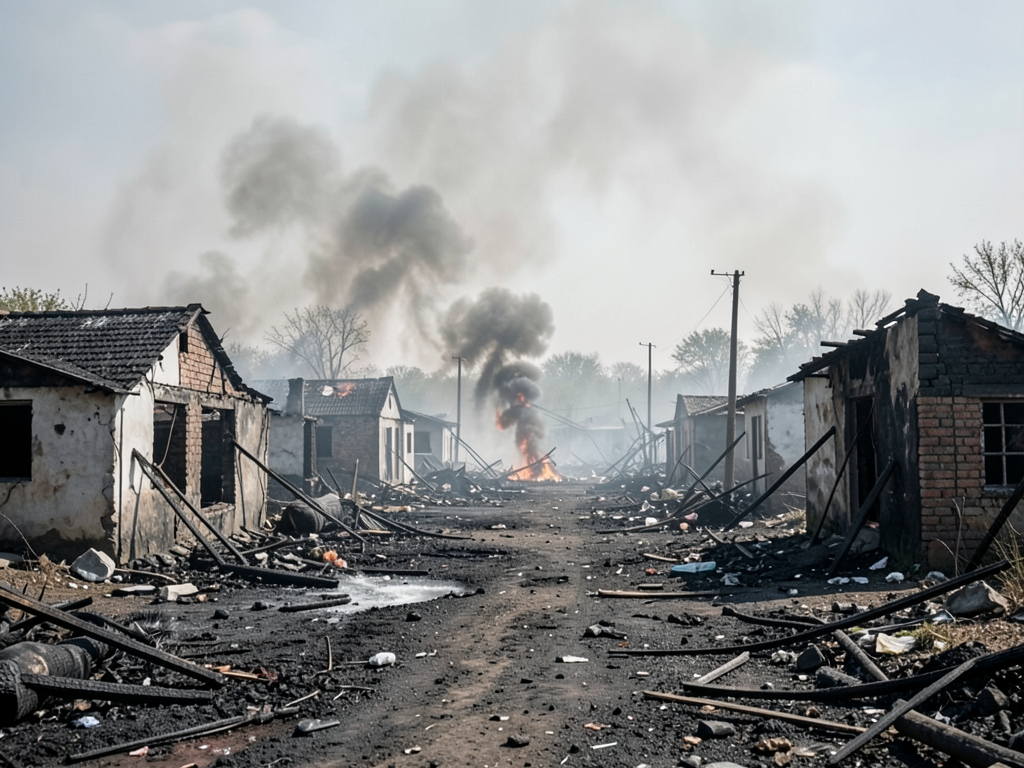
Global oil prices jumped sharply on Monday morning as Israel ordered its forces to advance further into Lebanese territory, shattering hopes for a lasting ceasefire and reigniting fears of a wider Middle East conflict that could choke off critical energy supplies.
Brent crude climbed over 2 percent to reach $93.05 per barrel, while US crude futures rose to $89.53, marking a significant spike that analysts warn could soon translate into higher fuel costs for import-dependent economies like Pakistan. The escalation comes despite a ceasefire agreement announced more than six weeks ago, which has repeatedly failed to hold.
Israel’s intensified military operations in Lebanon target the Iranian-backed Hezbollah militant group, which began launching rockets and drones into Israeli territory in early March. The conflict has since become the most significant spillover from the broader Iran-US confrontation that erupted in February following joint American and Israeli strikes.
According to reports, Israeli Prime Minister Benjamin Netanyahu has formally requested US approval to expand airstrikes to include Beirut, arguing that limiting operations undermines Israeli strategic objectives. Israeli military planners have presented scenarios involving strikes on the Lebanese capital that would require large-scale civilian evacuations. While the Trump administration has reportedly shown greater openness to the proposal, no final authorization has been granted.
However, in a dramatic reversal on Monday, US President Donald Trump announced that no Israeli troops would enter Beirut following a phone call with Netanyahu. Trump also claimed to have secured an agreement with Hezbollah to halt all hostilities, though the durability of such assurances remains uncertain.
Iran responded with sharp warnings. The Intelligence Organisation of Iran’s Islamic Revolutionary Guard Corps declared that any crossing of what it termed red lines in Lebanon and Gaza would be treated as direct warfare, prompting defensive operations including the opening of new fronts. Iranian officials also warned residents of northern Israel to evacuate if attacks on Beirut proceed.
Adding to market anxiety, concerns are mounting over naval mines in the Strait of Hormuz, the narrow waterway through which roughly one-fifth of the world’s oil and gas flows. Iran has effectively kept the strait closed since the conflict began, and reports suggest additional mines were laid recently despite ceasefire terms. Analysts caution that even if the strait reopens, the process will be slow and supply relief limited.
For Pakistan, the implications are immediate and severe. The country imports the vast majority of its crude oil and refined petroleum products, making it acutely vulnerable to price shocks. A sustained rise in global oil prices would inflate import bills, widen the current account deficit, and likely trigger higher domestic fuel prices, compounding inflationary pressures already straining household budgets.
Iranian Foreign Minister Abbas Araghchi emphasized that the ceasefire between Tehran and Washington applies to all fronts, including Lebanon, and that violations on one front constitute violations everywhere. Iranian parliament speaker Mohammad Bagher Ghalibaf accused the United States of breaching ceasefire terms by maintaining a naval blockade and failing to restrain Israeli actions.
Meanwhile, former Pakistani foreign minister Khurshid Mahmud Kasuri revealed that Pakistan is actively working to mediate between the United States and Iran, expressing cautious optimism that negotiations could eventually yield a durable peace agreement. His comments underscore Pakistan’s diplomatic stake in regional stability, given the direct economic and security consequences of prolonged Middle East turmoil.
With Israeli military operations continuing despite the nominal ceasefire, and Iranian threats of retaliation growing louder, the fragile balance in the region appears increasingly precarious. For Pakistani policymakers and consumers alike, the next few days could determine whether fuel prices remain manageable or spiral into a full-blown economic crisis.