In an extraordinary diplomatic rupture, United States President Donald Trump has publicly confirmed that he unleashed a torrent of profanity at Israeli Prime Minister Benjamin Netanyahu during a heated phone call, warning the embattled leader that his military escalation in Lebanon could destroy fragile peace negotiations with Iran.
Trump acknowledged in a podcast interview broadcast Wednesday that he called Netanyahu “effing crazy” and expressed frustration over Israel’s relentless military operations in Lebanon. The confrontation came as Washington scrambled to prevent the Lebanon conflict from completely derailing sensitive talks with Tehran that could reshape Middle Eastern geopolitics.
“I did,” Trump told the Pod Force One podcast when asked about the explosive exchange. “I wouldn’t say angry. I was a little bit perturbed at his constantly fighting with Lebanon, you know.”
According to multiple sources cited by Axios, Trump’s Monday phone call with Netanyahu included even harsher language. The US President reportedly told the Israeli leader: “You’d be in prison if it weren’t for me. Everybody hates you now. Everybody hates Israel because of this.”
The confrontation erupted after Iran issued a stark warning that its ceasefire agreement with Washington applied to all fronts, including Lebanon. Iranian Foreign Minister Seyed Abbas Araghchi declared that any violation on one front would constitute a breach across all theaters, directly threatening to abandon negotiations if Israeli operations in Lebanon continued.
Trump claimed after the call that he had communicated with Hezbollah through intermediaries and secured an agreement for mutual cessation of attacks—an unprecedented assertion given that no US president has ever acknowledged contact with the Iran-backed group, which Washington designates as a terrorist organization.
Despite Trump’s public statements about pulling back Israeli forces from Beirut, Netanyahu quickly contradicted the American president. The Israeli premier insisted his country’s military stance remained unchanged and that operations in southern Lebanon would continue as planned.
“Tonight, I spoke with President Trump and told him that if Hezbollah does not cease attacking our cities and citizens—Israel will attack terror targets in Beirut,” Netanyahu wrote on social media. “This stance of ours remains unchanged.”
US officials told Axios that Trump was particularly concerned about civilian casualties in Lebanon and objected to Israeli forces demolishing entire buildings to target single Hezbollah commanders. One official said Trump warned Netanyahu that bombing Beirut would further isolate Israel internationally.
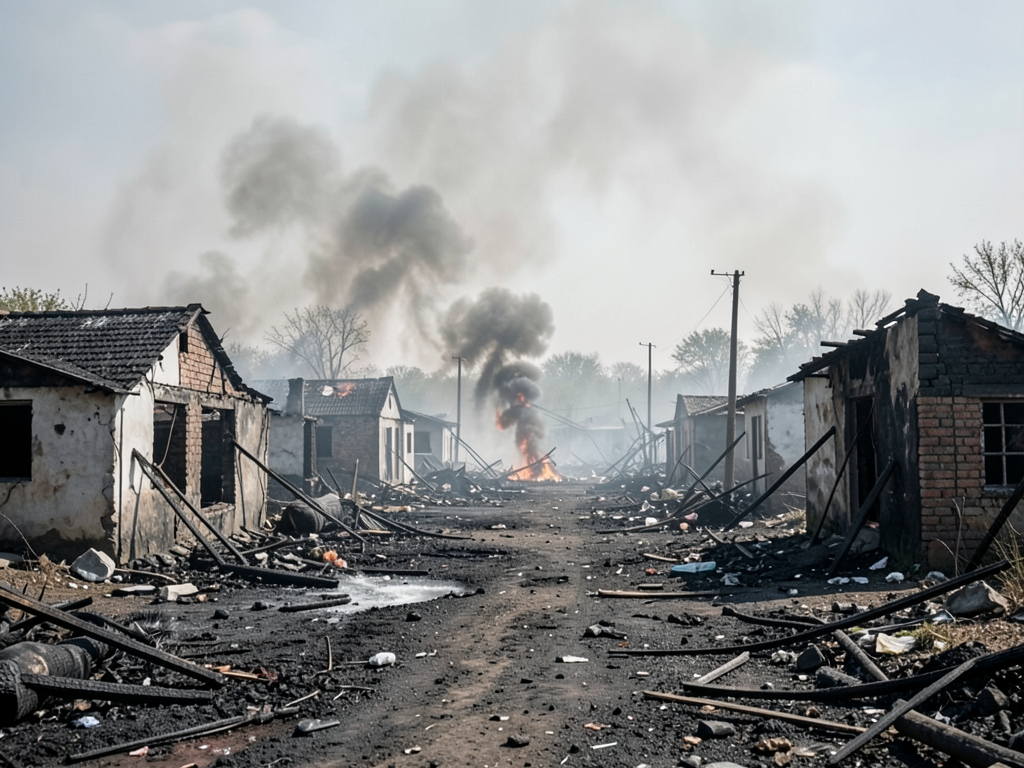
The diplomatic crisis comes as Israeli troops have pushed deeper into Lebanese territory, recently seizing the historic Beaufort Castle and issuing sweeping evacuation orders for areas up to 40 kilometers from the border. Lebanon’s health ministry reports that Israeli attacks have killed more than 3,400 people since early March, with over a million displaced.
Iran responded to the escalation by suspending dialogue with mediators and threatening to expand its blockade of the Strait of Hormuz to include the Bab al-Mandab Strait at the entrance of the Red Sea—a move that could further disrupt global energy markets already strained by Tehran’s control of Gulf shipping lanes.
Trump later told CNBC that he didn’t care if the Iran peace talks collapsed, calling the negotiations “boring.” However, his administration continues to pursue a partial ceasefire arrangement that would see Hezbollah halt attacks on Israel in exchange for Israeli restraint in Beirut, though fighting in southern Lebanon would continue.
Lebanese officials indicated that Hezbollah had communicated willingness to stop strikes on northern Israel through Parliament Speaker Nabih Berri, but only if Israel spares Beirut and its suburbs from bombardment. The group insists Israel must cease hostilities first.
The public confirmation of Trump’s profane outburst marks an unusual moment of transparency about typically private diplomatic exchanges and underscores growing American frustration with Netanyahu’s military strategy. Trump insisted in the podcast that he and Netanyahu “get along very well” despite the heated exchange.
As military delegations from Israel and Lebanon prepare for further US-mediated talks in Washington, the outcome remains uncertain. Lebanon’s Prime Minister Nawaf Salam has accused Israel of pursuing a “scorched earth policy and collective punishment” in the south, while calling negotiations “the least costly path” forward despite no guarantees of success.