A devastating Houthi missile attack on Riyadh’s King Khalid International Airport has left at least 12 people dead and more than 300 wounded, marking the deadliest assault on Saudi territory in over a decade and pushing the United States toward direct military involvement in Yemen’s expanding conflict.
The Saturday morning strike hit without warning, catching travelers and airport staff completely off guard as Saudi Arabia’s threat detection systems failed to sound any alarm. Victims included citizens from eight countries—four Saudis, two Bangladeshis, and nationals from the United States, Jordan, Palestine, Syria, Sudan, and Egypt—underscoring the attack’s indiscriminate nature at one of the Middle East’s busiest aviation hubs.
Hospitals across Riyadh were quickly overwhelmed as ambulances and helicopters rushed casualties to emergency rooms. Medical sources indicated several victims remain in critical condition, suggesting the death toll could climb higher in coming days.
The Iran-backed Houthi movement claimed responsibility for shutting down the airport serving eight million residents, declaring Saudi airspace a military operations zone. All incoming flights were diverted or cancelled, creating chaos for thousands of travelers and raising serious questions about the kingdom’s air defense capabilities despite billions spent on advanced military systems.
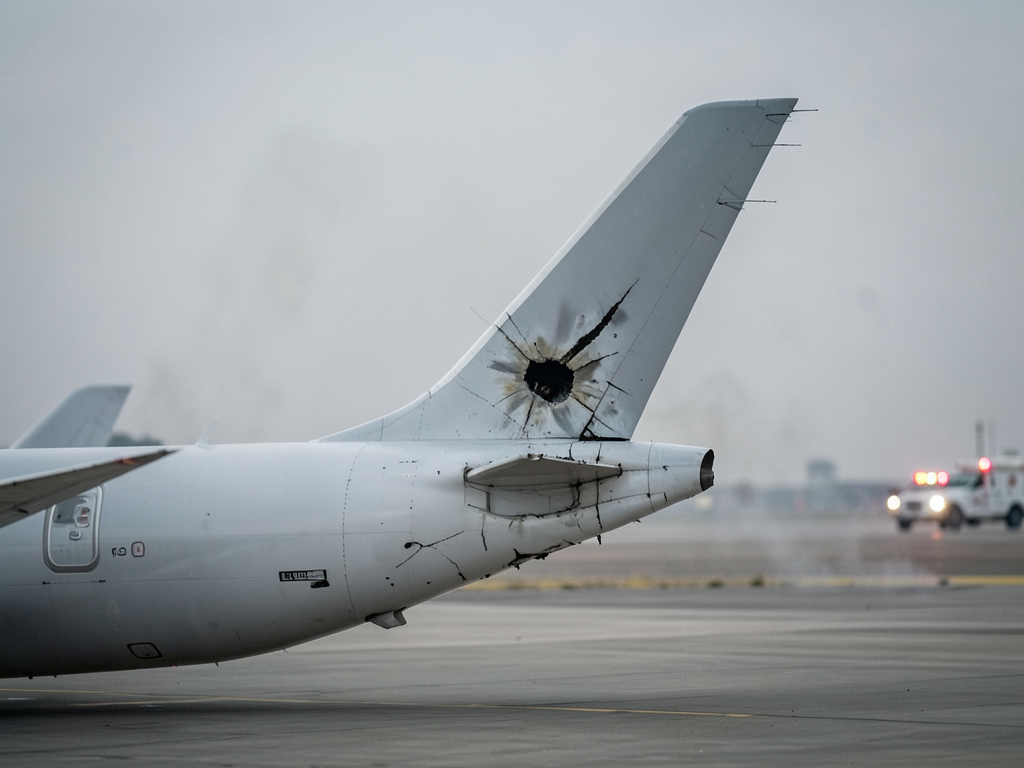
This attack represents the third strike on the same airport within one week. Earlier assaults on Thursday killed three Saudi nationals and caused extensive damage to a Saudia commercial aircraft on the tarmac, while Wednesday’s strikes claimed three more lives at Riyadh and Abha airports.
US President Donald Trump responded swiftly to the escalating violence, telling reporters outside the White House that Washington is actively considering joining Saudi military operations against the Houthis. “We may. We’re going to look at it,” Trump stated, adding that American decision-makers “move very quickly” on such matters.
The American embassy in Riyadh issued urgent warnings for US citizens to avoid the airport and surrounding areas entirely.
Eyewitnesses described scenes of terror inside the terminal as an explosion ripped through departure areas, collapsing ceiling sections near gates and leaving injured passengers scattered across floors. Verified video footage captured dozens of ambulances converging on the facility as security forces cordoned off blast zones.
The violence stems from Yemen’s reignited civil war, where Saudi-backed government forces launched a major offensive Monday to reclaim the strategic Bab el-Mandeb strait from Houthi control. The narrow waterway commands access to the Red Sea and represents a chokepoint for global shipping routes.
Saudi Arabia originally intervened in Yemen’s conflict in 2015, leading an Arab coalition against the Houthis who had seized the capital Sanaa. That intervention devolved into a bloody stalemate killing hundreds of thousands before a 2022 truce temporarily froze hostilities. The ceasefire collapsed over summer as Houthis captured critical territory, prompting the current government counteroffensive.
The Houthis have placed Yemen’s third-largest city, Taiz, under siege while warning international airlines to avoid Saudi airspace. Multiple carriers have already suspended Riyadh services, and the disruption comes just days before the kingdom hosts major energy and investment conferences designed to showcase its economic transformation plans.
Saudi military officials vowed strong retaliation while conducting hundreds of airstrikes on Houthi-controlled areas. The rebel group claims these attacks have killed civilians including women and children, though independent verification remains impossible.
The escalating conflict now threatens to pull additional regional and international powers into what analysts describe as a dangerous spillover from broader US-Iran tensions, with potentially catastrophic consequences for Middle Eastern stability and global energy markets.